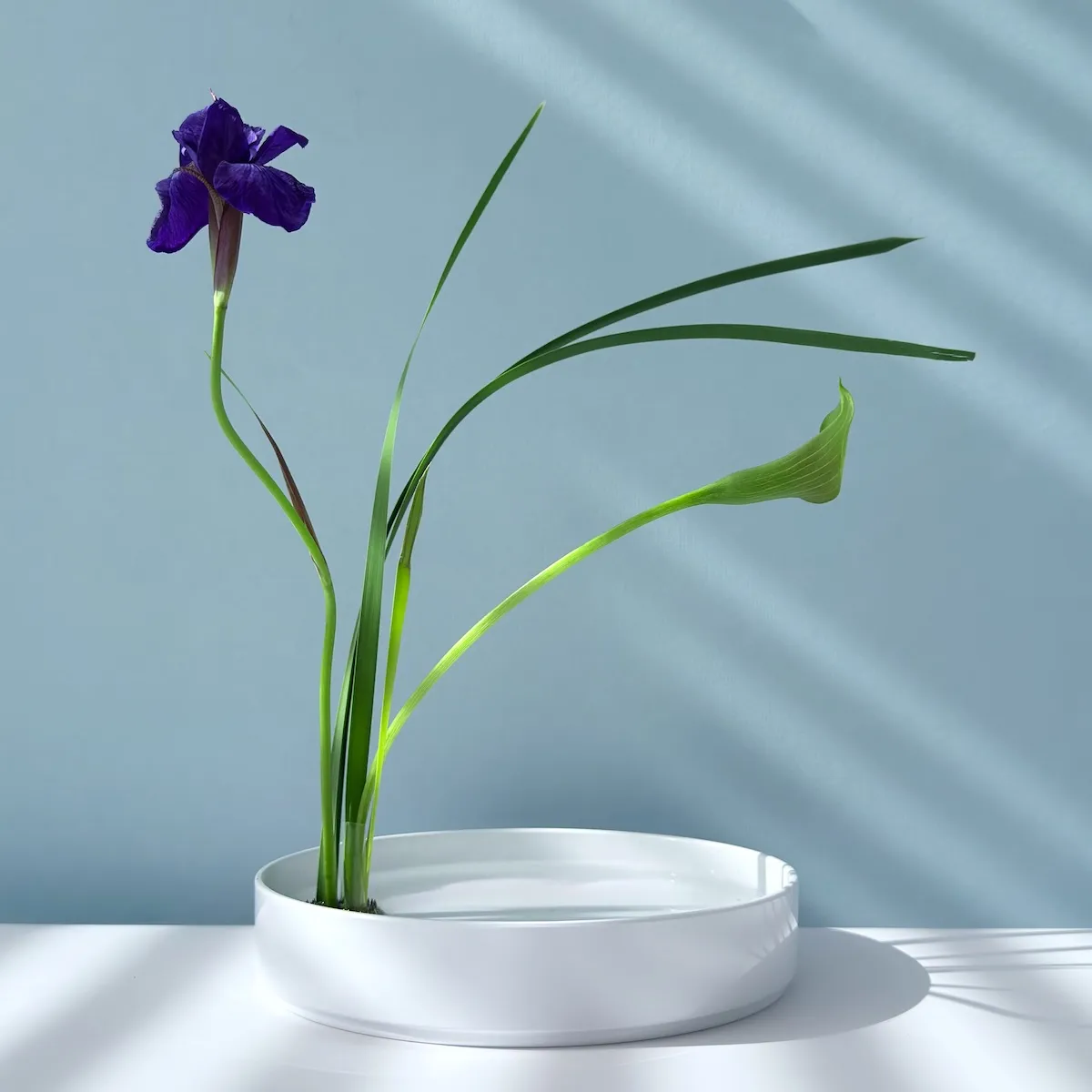
If you've ever searched for "ikebana zen," you've probably felt the kinship before you could name it: the spare elegance of Japanese flower arranging, and the still, unhurried feeling we casually call zen. They aren't the same practice, but they rhyme. Both value presence over spectacle. Both treat emptiness as meaningful. Both prefer one clear gesture to a crowded display.
What ikebana brings
Ikebana is the centuries-old Japanese art of flower arranging. Practitioners study line, proportion, and the relationship between a living stem and the air around it. A branch may lean; a bloom may sit low; asymmetry is intentional. The arrangement isn't trying to look full. It's trying to hold a moment of attention.
That's why ikebana photographs translate so well to quiet screens: the composition already knows how to breathe.
Why "zen" feels right
In everyday language, zen often means calm, restraint, and a willingness to leave things uncluttered. When people talk about ikebana zen, they're usually naming that shared atmosphere: a zen garden's raked line, a tea room's spare shelf, a vase with three stems and a lot of space. Zen flower arranging, in that plain sense, is arranging so the viewer can rest, not so the room looks decorated.
A daily pause, without the studio
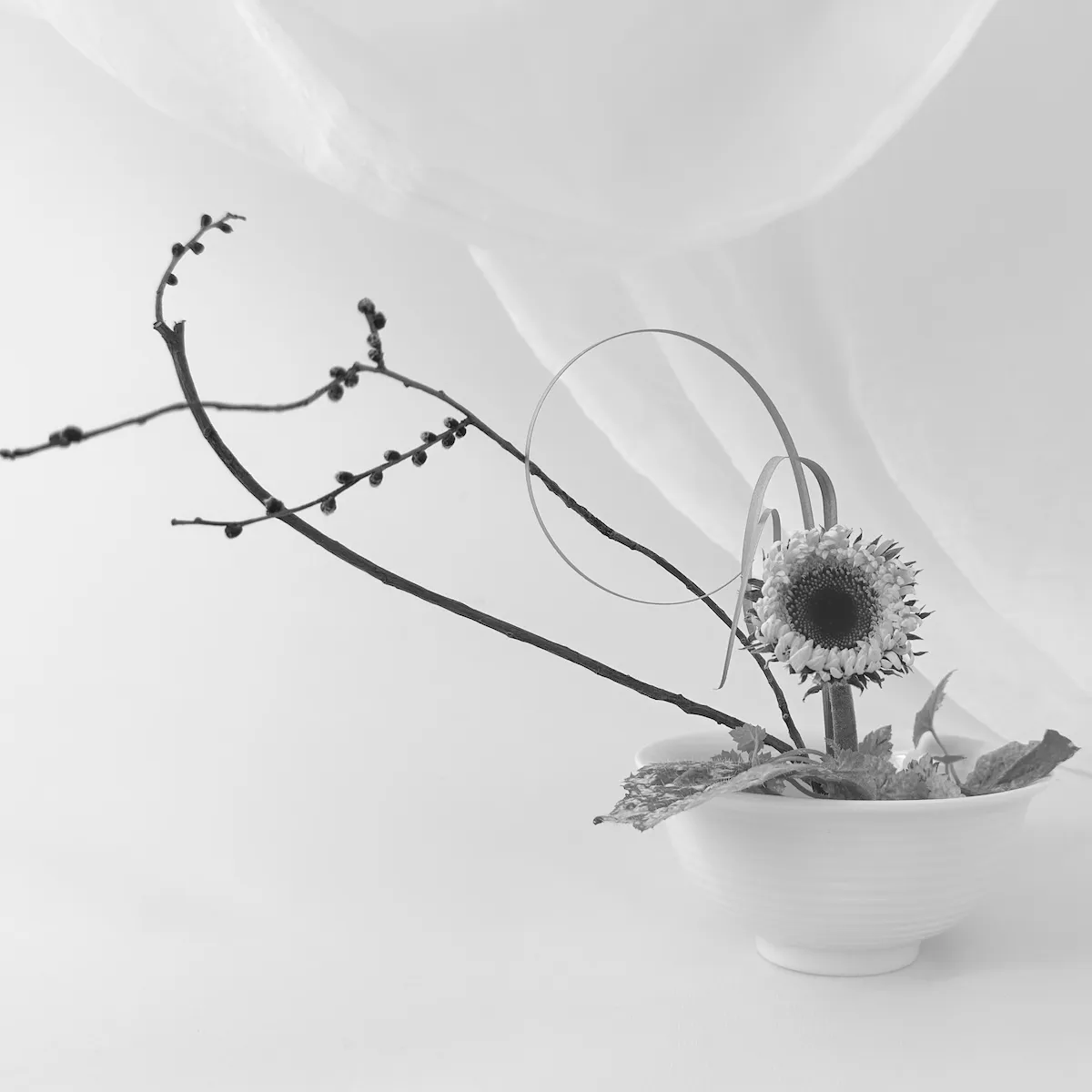
Classical training takes years. Daily zen flower arranging can also mean sitting with finished work: looking at a single arrangement long enough that your shoulders drop. That's the idea behind Zen Flowers: real ikebana, photographed by hand, presented one at a time with optional soundscapes. There's no feed to scroll, no streak to keep. Just the arrangement, and however long you want to stay with it.
Where to go next
Read what zen flowers are for the short definition, or zen flower arrangements for how the gallery uses space and line. The studio story lives on the About page.